
The Difference Between Pressure Washing and Soft Washing - When to Use Each
Is Pressure Washing Or Soft Washing Right For Your Property?
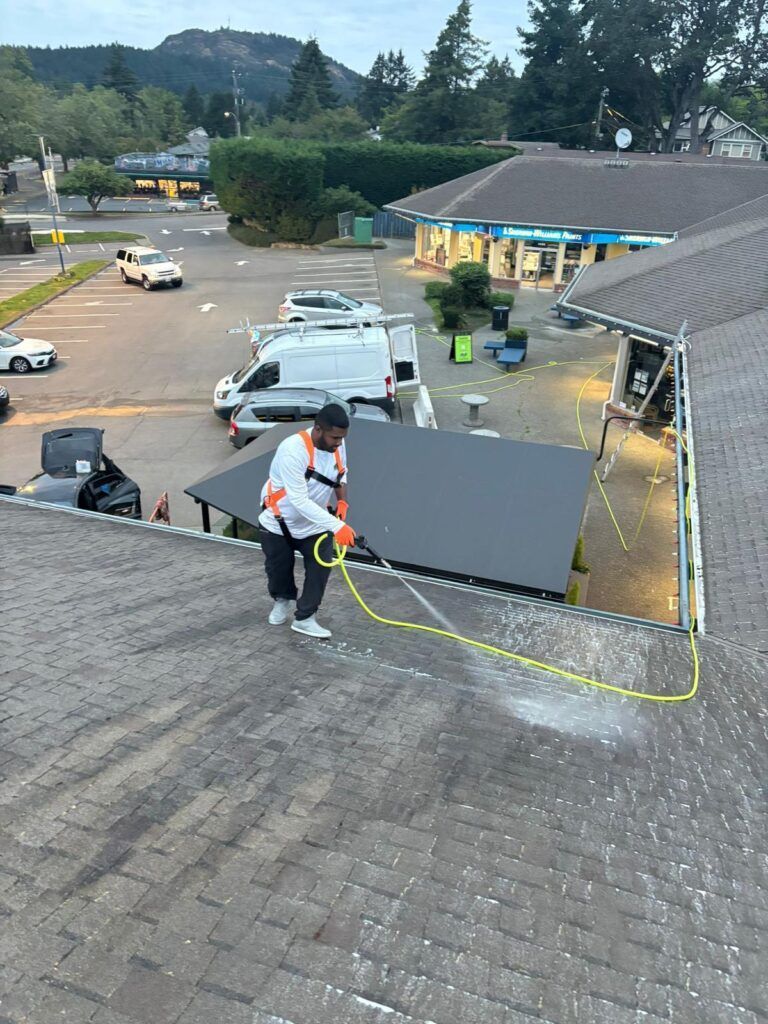
Keeping your commercial or residential property clean is essential, but not every surface can handle the same cleaning method. Two of the most common techniques we use are pressure washing and soft washing, understanding the difference can help you make the right choice for your building, sidewalks, parking areas, or exterior features.
What Is Pressure Washing?
Pressure washing uses high-pressure water, typically 2,500–4,000 PSI, to blast away dirt, oil, salt, grime, chewing gum, and buildup of all kinds on more durable surfaces.
This method is ideal for:
- Concrete sidewalks
- Parking lots and driveways
- Brick surfaces
- Parkades
- Heavy equipment
- Tough stains and grease spots
It’s a powerful, fast, and effective way to clean hard surfaces and remove deep, stubborn grime.
What Is Soft Washing?
Soft washing is a low-pressure cleaning method that relies on specialized cleaning solutions, rather than force, to safely remove dirt, algae, mildew, mold, and organic buildup from delicate surfaces. Instead of blasting grime away with super high PSI, soft washing uses gentle water pressure similar to a garden hose, paired with biodegradable detergents and hand brushes that break down contaminants at their roots.
This process is especially effective on surfaces that could be damaged by aggressive cleaning. Materials like vinyl siding, stucco, painted exteriors, roofing shingles, aluminum, and decorative features can crack, chip, or erode under high pressure. Soft washing avoids these risks by letting the cleaning agents do the work, which not only protects your exterior but also gives a longer lasting clean because it kills the underlying growth instead of just washing off the top layer.
Another major benefit is that soft washing helps maintain colour, structural integrity, and overall lifespan of building materials. It’s also ideal for reaching higher areas safely and evenly, ensuring a consistent, spotless finish across your entire property.
Because soft washing it is gentle, it’s perfect for:
- Stucco, vinyl, and painted siding
- Commercial signage
- Building exteriors with delicate materials
- Roofs
- Asphalt shingles
- Awnings and canopies
- Older or more delicate features
- Outdoor seating areas
Why the Difference Matters
Choosing the wrong method can cause expensive and long-lasting structural damage.
For example:
Using pressure washing on a roof or stucco can crack, dent, or strip materials and using soft washing on heavily stained concrete won’t clean effectively.
Each method has a specific purpose, and knowing which one to use ensures your property stays clean and protected.
When to Choose Pressure Washing
You want pressure washing when the surface is strong, durable, and heavily soiled.
It’s best for jobs where force is needed to break through dirt, such as:
- High-traffic walkways
- Parking lot oil stains
- Graffiti removal
- Commercial entrances
- Winter salt buildup on concrete
This method leaves hard surfaces looking refreshed and safe.
When to Choose Soft Washing
Soft washing is best when your goal is gentle cleaning that protects surfaces while removing unwanted stains or organic growth. It’s the right choice for:
- Building siding and exteriors
- Roof cleaning
- Cleaning before painting
- Washing sensitive materials or painted surfaces
It delivers a deep, lasting clean without causing any structural or cosmetic damage.
Which Method Does My Property Need?
Most properties benefit from a mix of both.
At HB Cleaning, we inspect your property, identify problem areas, and recommend the safest and most effective approach. The result? A cleaner building, longer-lasting materials, and a better overall appearance.
Contact us today to get a free quote on your next exterior cleaning job!
Share the post!